Regenerative
PRP Therapy for Skin and Hair Rejuvenation
How platelet-rich plasma works, what the evidence actually supports for hair loss and skin quality, how many sessions are realistic, and who it suits.
Medically reviewed by Dr. Maliha Dar, DHA-licensed General Practitioner (licence 29664582-005) · 15 September 2026
In short
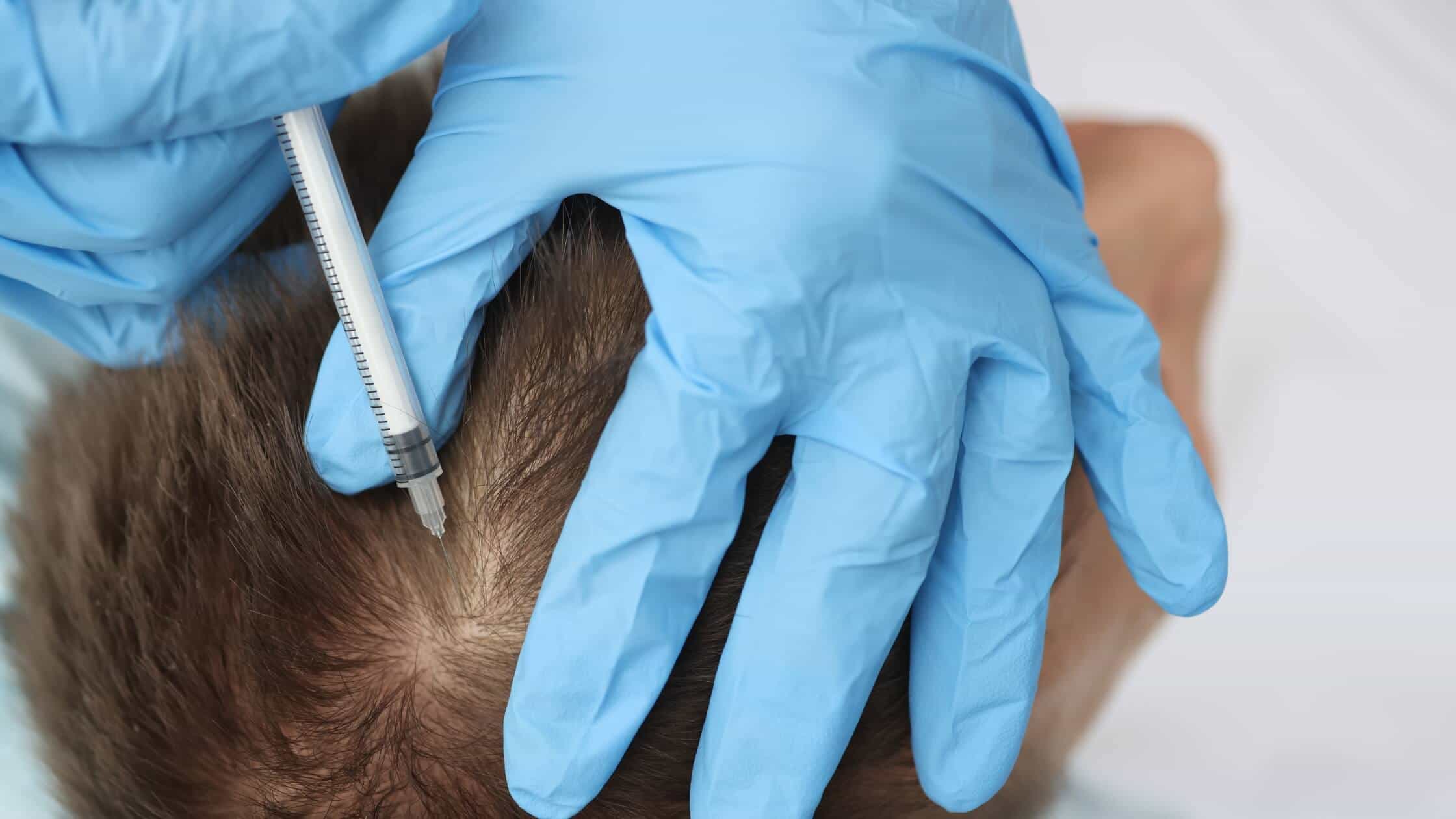
PRP therapy concentrates platelets from your own blood and injects them into the scalp or skin to stimulate repair. Evidence is strongest for early androgenetic hair loss, where it can improve density as an adjunct treatment. A course of three to four sessions is typical, with maintenance thereafter.
Key facts
| What it is | Your own platelets, concentrated by centrifuge |
|---|---|
| Used for | Early hair thinning, skin quality, acne scarring |
| Initial course | Typically 3–4 sessions, 4–6 weeks apart |
| Maintenance | Usually every 4–6 months to hold results |
| Results visible | Gradual — 3–6 months for hair |
| Downtime | Redness and tenderness for 24–48 hours |
| Evidence strength | Moderate for hair loss; more limited for skin |
Platelet-rich plasma uses a concentrated preparation of your own platelets to stimulate repair in the scalp or skin. Because the material comes from your own blood, there is no risk of allergic reaction to a foreign substance — which is a genuine advantage, and also the feature most often used to imply that PRP works better than it does.
This guide sets out what PRP is reasonably supported for, what it is not, and what a realistic course looks like.
How PRP Is Prepared
A small volume of blood is drawn, much as for a routine blood test. It is spun in a centrifuge, which separates the blood into layers by density. The platelet-rich layer is drawn off and injected into the target area.
Preparation method genuinely matters. Centrifuge speed and duration, the kit used, and the final platelet concentration all vary between clinics, and the resulting product is not standardised across the industry. This is one of the reasons published results vary so widely, and a fair question to ask any clinic offering it.
The whole appointment usually takes 45–60 minutes, most of which is preparation.
PRP for Hair Loss: What the Evidence Supports
Hair loss is where PRP has the strongest case. Multiple controlled studies and several meta-analyses have found improvements in hair density and thickness in androgenetic alopecia — male and female pattern hair loss — compared with placebo.
PRP is best understood as an adjunct rather than a replacement for established treatments. For many people the strongest plan combines PRP with proven medical therapy, and that conversation should happen at consultation rather than being avoided because it is less commercially convenient.
PRP for Skin
For skin, PRP is typically used with microneedling — the so-called vampire facial — or injected into specific areas such as under the eyes.
The evidence here is weaker than for hair. Studies suggest improvements in skin texture, and there is reasonable support for PRP combined with microneedling in atrophic acne scarring. But much of the literature is small-scale and it is genuinely difficult to separate the effect of PRP from the effect of the microneedling it is delivered with, since microneedling alone stimulates collagen.
How Many Sessions Are Realistic
For hair, a typical initial course is three to four sessions spaced four to six weeks apart, followed by maintenance every four to six months. Results are gradual — reduced shedding often comes first, at around two to three months, with visible density changes taking three to six months.
For skin and acne scarring, three to four sessions spaced four weeks apart is common, with results building over several months as collagen remodels.
PRP is not a one-off treatment, and any clinic presenting it as such is overselling it. Equally, if you have completed a full course with no discernible change, continuing indefinitely is not reasonable either. Photographic assessment at baseline and at three to six months is the honest way to judge whether it is working for you.
Side Effects and Who It Suits
PRP is well tolerated. Expected effects are scalp or skin tenderness, redness, and mild swelling for 24–48 hours. Bruising at injection sites is possible. Headache after scalp treatment is not unusual on the first day. Infection is rare.
PRP is not suitable for people with platelet disorders, active blood-borne infection, certain haematological conditions or active cancer, and is avoided in pregnancy. Anticoagulant medication and recent systemic corticosteroids may affect suitability or results. Anyone with a significant needle phobia should factor in that this treatment starts with a blood draw.
Good candidates are people with early, active hair thinning who want to slow progression, people with acne scarring seeking a regenerative approach alongside microneedling, and people who prefer using their own biological material over synthetic products — provided expectations are realistic.
PRP in Dubai: What to Ask
Ask which preparation system the clinic uses and what platelet concentration it achieves. Ask whether treatment is being recommended alongside investigation of the underlying cause of your hair loss, or instead of it. Ask how progress will be measured, and insist on standardised baseline photographs.
Be cautious of packages sold upfront for extended courses before anyone has established whether you respond, and of any clinic presenting PRP as a cure for advanced hair loss.
Frequently asked questions
- Does PRP really work for hair loss?
- Evidence supports improvement in hair density and thickness in early to moderate androgenetic alopecia, though studies are generally small and protocols vary. It works best where follicles are thinning but still present, and is best used alongside proven medical treatment rather than instead of it.
- How many PRP sessions will I need?
- For hair, typically three to four sessions four to six weeks apart, then maintenance every four to six months. For skin and acne scarring, three to four sessions four weeks apart is common.
- When will I see results from PRP?
- Gradually. Reduced shedding is often noticed first at two to three months, with visible density changes at three to six months. Skin results build over several months as collagen remodels.
- Is PRP painful?
- Scalp injections are uncomfortable rather than severely painful, and topical numbing is used. Expect tenderness for a day or two afterwards. The treatment begins with a standard blood draw.
- Can PRP regrow hair on a bald area?
- No. PRP can support follicles that are miniaturising but still present. It cannot regenerate follicles that have been lost, so areas of long-established complete baldness will not respond.
- Is PRP safe?
- It is well tolerated because the material is your own. It is avoided in platelet disorders, active blood-borne infection, certain blood conditions, active cancer, and pregnancy. Side effects are usually limited to tenderness and redness for a day or two.
References
- [1]Journal of Cosmetic Dermatology. Efficacy of platelet-rich plasma in androgenetic alopecia: A systematic review and meta-analysis (2021).
- [2]Dermatologic Surgery. Platelet-Rich Plasma in the Treatment of Alopecia: A Systematic Review (2019).
- [3]American Academy of Dermatology. Hair Loss: Diagnosis and Treatment.
This article was last updated on 15 September 2026. Clinical content is reviewed at least every 12 months, and sooner if guidance changes.
Medical Disclaimer
This article is for educational purposes only and does not replace a personalised medical consultation. Treatment suitability varies by individual. Please book a consultation with Dr. Maliha Dar before proceeding with any aesthetic procedure.
Related Articles
 Skin Health
Rejuran: Healing Skin from Within
What polynucleotide treatment does, how Rejuran Face differs from Rejuran Eye, what a realistic course involves, and how it compares to fillers and Profhilo.
 Treatments
Non-Surgical Facial Rejuvenation: A Complete Overview
A map of the non-surgical options — what each category actually does, how to match treatment to concern, what combines well, and where surgery is the honest answer.