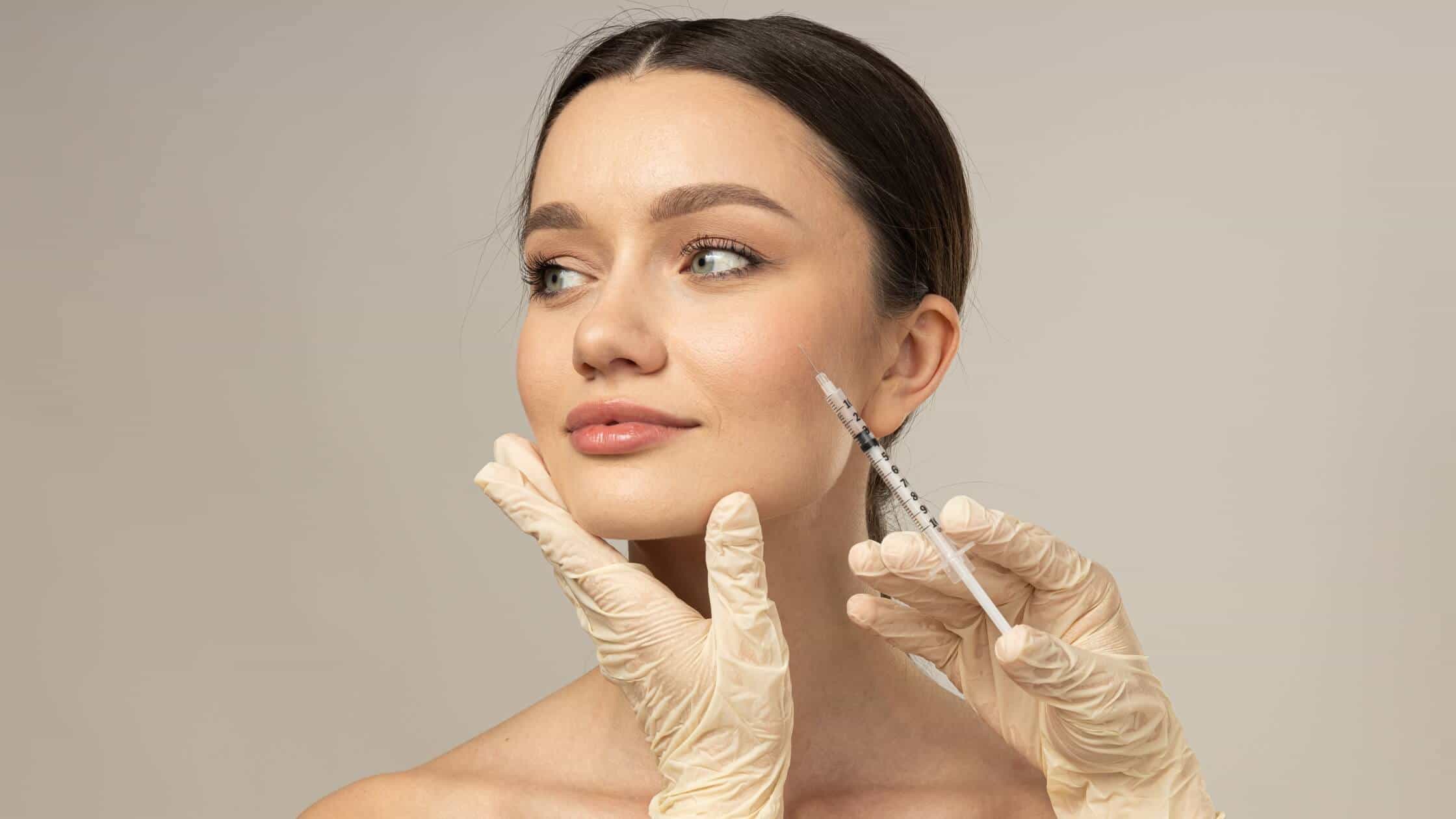
Skin Health
Rejuran: Healing Skin from Within
What polynucleotide treatment does, how Rejuran Face differs from Rejuran Eye, what a realistic course involves, and how it compares to fillers and Profhilo.
Medically reviewed by Dr. Maliha Dar, DHA-licensed General Practitioner (licence 29664582-005) · 15 September 2026
In short
Rejuran is a polynucleotide treatment derived from purified salmon DNA. Rather than adding volume, it supports the skin's own repair processes to improve texture, elasticity and hydration. A course of three to four sessions two to four weeks apart is standard, with results building gradually.
Key facts
| What it is | Polynucleotides (PN/PDRN) from purified salmon DNA |
|---|---|
| Treats | Skin texture, elasticity, fine lines, under-eye quality |
| Not a filler | Improves skin quality; does not add structural volume |
| Course | Typically 3–4 sessions, 2–4 weeks apart |
| Results visible | Gradual, over 6–12 weeks |
| Downtime | Small bumps for 24–48 hours; possible bruising |
| Not suitable if | Fish or seafood allergy, pregnancy, breastfeeding |
Rejuran belongs to a category that often gets lumped in with fillers and injectables but works on a completely different principle. It does not add volume, lift, or restrict muscle movement. It targets the quality of the skin itself.
This guide explains what polynucleotides are, the difference between Rejuran Face and Rejuran Eye, what a realistic course involves, and how it compares with the treatments people usually weigh it against.
What Polynucleotides Are
Polynucleotides are chains of nucleotides — the building blocks of DNA — purified from salmon DNA. Salmon is used because its DNA structure is highly compatible with human tissue and can be purified to a high standard.
Once injected into the skin, polynucleotides act as a biological scaffold and signal. They hold water, support fibroblast activity (the cells that produce collagen and elastin), and appear to have an anti-inflammatory effect. The intent is to improve the skin's own function rather than to impose a shape on it.
One point of transparency: much of the published research on polynucleotides comes from South Korea, where the technology originated, and some of it is industry-sponsored. The clinical experience is substantial and patient satisfaction is generally high, but the independent long-term evidence base is smaller than for older treatments such as botulinum toxin.
Rejuran Face vs Rejuran Eye
The two formulations differ in concentration and viscosity because the areas they treat are structurally different.
An important clarification about dark circles, because this is where expectations most often go wrong. Under-eye darkness has several causes: pigmentation, thin skin showing underlying vasculature, and shadowing cast by a hollow. Rejuran Eye can improve the quality and thickness of thin skin, which helps where vasculature is showing through. It does not fill a hollow — that requires filler — and it does not treat true pigmentation. If nobody has told you which of these you actually have, the treatment plan is a guess.
Rejuran vs Profhilo vs Filler
These three are frequently compared and do quite different things.
- Rejuran (polynucleotide) — supports repair and improves skin quality over a course of sessions. Best for texture, elasticity and resilience.
- Profhilo (bio-remodelling hyaluronic acid) — delivers intense hydration and improves laxity through slow HA release. Best for crepey, dehydrated skin. Usually two initial sessions four weeks apart.
- Dermal filler — adds structural volume and contour. Best for hollowing, projection and definition. It does not improve skin quality.
They are not mutually exclusive and are often sequenced rather than chosen between: skin-quality treatment to improve the canvas, structural treatment where volume is genuinely lost. What matters is that you are told which problem is being solved.
What a Course Involves
A standard initial course is three to four sessions spaced two to four weeks apart, followed by maintenance every six to twelve months. A single session will not deliver the result the treatment is capable of.
The treatment involves many small injections, so topical numbing is applied first, usually for 20–30 minutes. The injections themselves take around 15–20 minutes.
Expect small raised bumps immediately afterwards where the product has been deposited. These typically settle within 24–48 hours, though under the eyes they can take slightly longer. Bruising is possible, particularly in the periorbital area. This is worth planning around — do not book a course two days before an event.
Results build gradually over six to twelve weeks as the skin responds. Most people notice improved smoothness and a change in how their skin feels before they see a visible difference in photographs.
Who It Suits and Who Should Avoid It
Rejuran suits people whose concern is skin quality rather than volume: dullness, rough texture, early fine lines, loss of elasticity, or thin crepey under-eye skin. It is a reasonable option for people who want a regenerative rather than a volumising approach, and it can be useful in people who are not good candidates for filler.
It is not appropriate for anyone with a fish or seafood allergy, given the salmon-derived source. It is avoided in pregnancy and breastfeeding, during active skin infection in the treatment area, and in people with certain autoimmune conditions — all of which should be raised at consultation.
It will not lift sagging skin, replace lost volume, or remove deep static lines. Anyone promising those outcomes from Rejuran is describing a different treatment.
Frequently asked questions
- What is Rejuran made from?
- Polynucleotides purified from salmon DNA. Salmon is used because its DNA structure is highly compatible with human tissue and can be purified to a high standard. It is not suitable for anyone with a fish or seafood allergy.
- What is the difference between Rejuran Face and Rejuran Eye?
- Rejuran Eye is a lighter formulation designed for the thin skin around the eyes, targeting crepey texture and fine lines. Rejuran Face is used across the face for overall texture, elasticity and pore appearance.
- Does Rejuran work for dark circles?
- It depends on the cause. Rejuran Eye can improve thin, crepey skin that allows underlying vasculature to show. It does not fill hollowing, which needs filler, and it does not treat true pigmentation. Identifying the cause first is essential.
- How many Rejuran sessions do I need?
- Typically three to four sessions two to four weeks apart, then maintenance every six to twelve months. A single session will not achieve the full effect.
- Is Rejuran the same as filler?
- No. Filler adds structural volume and contour. Rejuran improves the quality of the skin — texture, elasticity and hydration — without adding volume. They address different problems and are often used together.
- How long does the downtime last?
- Small bumps at the injection points usually settle within 24–48 hours, sometimes slightly longer under the eyes. Bruising is possible. Avoid scheduling treatment immediately before an important event.
- Rejuran or Profhilo — which is better?
- They solve different problems. Profhilo delivers intense hydration and addresses laxity through slow-release hyaluronic acid. Rejuran supports skin repair and improves texture and elasticity. The right choice depends on whether your primary concern is dehydration and laxity or texture and resilience.
References
- [1]Journal of Cosmetic Dermatology. Polydeoxyribonucleotide in aesthetic and regenerative dermatology: a review of mechanisms and clinical applications (2023).
- [2]Archives of Plastic Surgery. Effects of Polydeoxyribonucleotide on Skin Rejuvenation and Wound Healing (2020).
This article was last updated on 15 September 2026. Clinical content is reviewed at least every 12 months, and sooner if guidance changes.
Medical Disclaimer
This article is for educational purposes only and does not replace a personalised medical consultation. Treatment suitability varies by individual. Please book a consultation with Dr. Maliha Dar before proceeding with any aesthetic procedure.
Related Articles
 Regenerative
PRP Therapy for Skin and Hair Rejuvenation
How platelet-rich plasma works, what the evidence actually supports for hair loss and skin quality, how many sessions are realistic, and who it suits.
 Treatments
Non-Surgical Facial Rejuvenation: A Complete Overview
A map of the non-surgical options — what each category actually does, how to match treatment to concern, what combines well, and where surgery is the honest answer.