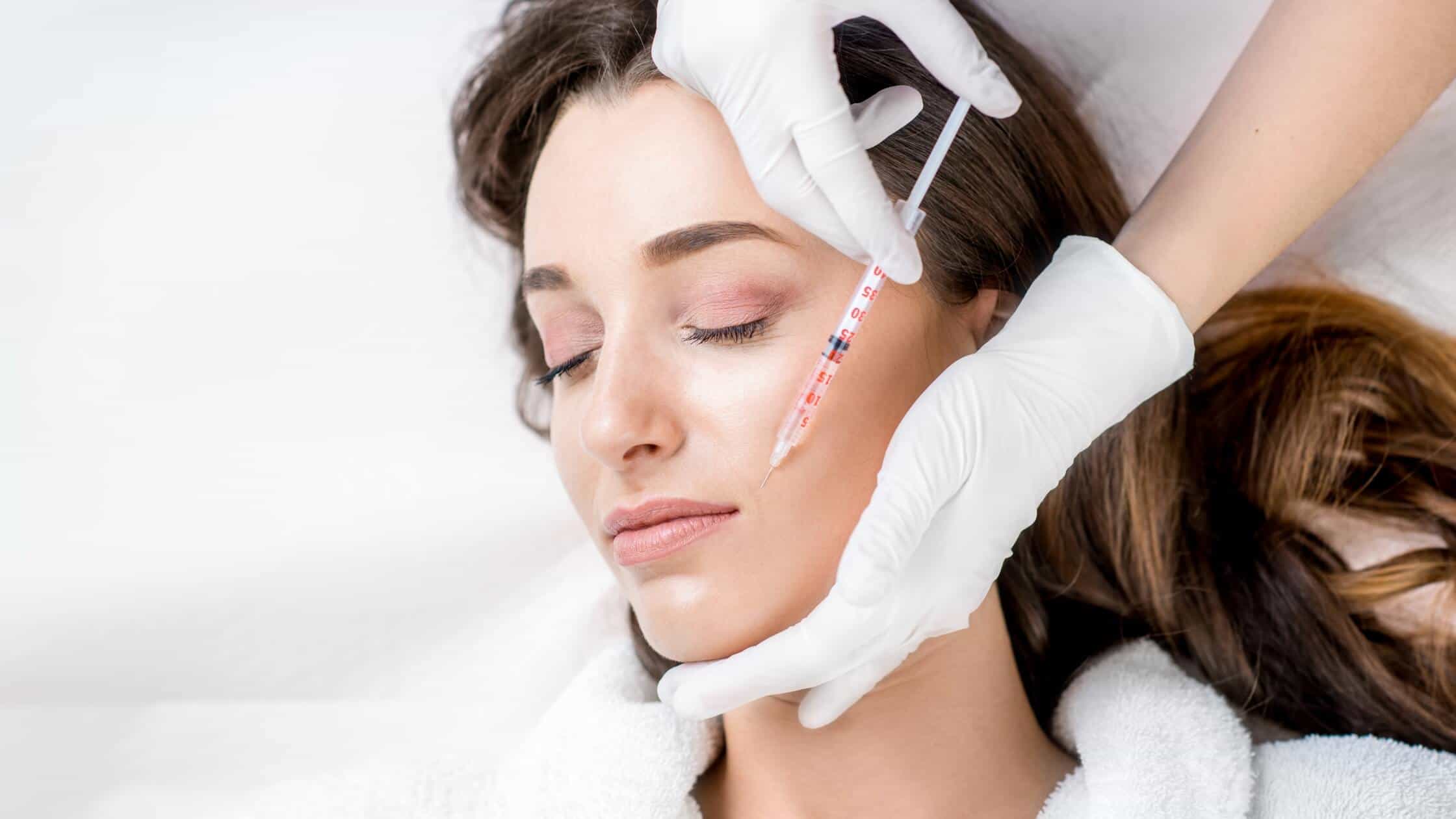
Injectables
Botox for Natural-Looking Results: What to Expect
How Botox softens dynamic wrinkles while preserving expression — dosing, treatment areas, onset, longevity, risks, and what natural results actually require.
Medically reviewed by Dr. Maliha Dar, DHA-licensed General Practitioner (licence 29664582-005) · 15 September 2026
In short
Botox (botulinum toxin type A) temporarily relaxes the muscles that create dynamic wrinkles. Onset is typically 3–5 days, with full effect at 10–14 days and duration of roughly 3–4 months. Natural-looking results depend on conservative dosing and accurate placement — not on treating every line.
Key facts
| What it is | Botulinum toxin type A, a prescription injectable |
|---|---|
| Treats | Dynamic lines: forehead, frown lines, crow's feet |
| Onset | 3–5 days; full effect at 10–14 days |
| Duration | Typically 3–4 months, varies by person and area |
| Downtime | Minimal — most people return to normal activity the same day |
| Performed by | Dr. Maliha Dar, DHA-licensed General Practitioner |
| Not suitable if | Pregnant, breastfeeding, or with certain neuromuscular conditions |
Botox is the most requested non-surgical aesthetic treatment worldwide, and the one most often done badly. The difference between a result that looks rested and one that looks frozen is rarely the product — it is the assessment, the dose, and where that dose is placed.
This guide explains what botulinum toxin actually does, what it can and cannot treat, how long it lasts, and the risks that a proper consultation should cover with you before you agree to anything.
How Botox Works
Botulinum toxin type A blocks the release of acetylcholine, the chemical signal that tells a muscle to contract. The targeted muscle relaxes, and the skin folding above it is no longer creased with every expression. Over the following weeks, existing lines soften because they are no longer being reinforced hundreds of times a day.
The effect is temporary by design. Nerve endings regenerate, muscle function returns, and the treatment wears off.
Which Areas Can Be Treated
The three classic areas are the forehead lines, the frown lines between the brows (glabella), and crow's feet at the outer corners of the eyes. These are the best-evidenced and most predictable.
Beyond those, botulinum toxin is commonly used for several other purposes:
- Masseter slimming — softening a heavy or square jawline, and easing clenching
- Brow lift — a subtle lift by selectively relaxing muscles that pull the brow down
- Gummy smile correction — reducing excessive upper lip elevation
- Lip flip — a small dose to gently roll the upper lip outward
- Neck bands and chin dimpling
- Excessive underarm sweating (hyperhidrosis)
What Makes Results Look Natural
Natural results depend on three things: accurate assessment of your muscle strength and movement pattern, appropriate dosing, and precise placement.
Muscle strength varies enormously between individuals. A dose that produces a soft, natural result in one person will barely register in another, and will over-treat a third. This is why a standard dose applied to everyone is the most common cause of a frozen look — and of disappointing under-treatment.
Conservative dosing preserves movement where movement matters. The aim is not zero motion; it is proportionate motion. You should still be able to look surprised, concerned or amused — just without deep lines setting in at rest.
There is also a strategic argument for restraint: it is straightforward to add a small amount at a two-week review if the effect is lighter than you wanted. It is not possible to remove Botox once injected. Starting conservatively is the safer direction of error.
Onset, Longevity and Review
Most people notice the first softening at 3–5 days. The full effect settles at 10–14 days, which is also the right moment to assess the result and adjust if needed — not before.
Duration is typically 3–4 months, though this varies with the area treated, the dose used, your metabolism, and how strong the muscle is. The glabella often holds slightly longer than crow's feet. Very active or athletic patients sometimes metabolise it faster.
Results do not abruptly stop. Movement returns gradually, which is why many people book their next appointment when they notice lines beginning to reappear rather than on a fixed calendar date.
Risks and Side Effects
Botulinum toxin has a long safety record in aesthetic doses, but it is a prescription medicine and it does carry risks. An honest consultation covers them.
Common and temporary: small bruises at injection points, mild headache in the first day or two, tenderness, and brief redness.
Less common: asymmetry, where one side responds differently to the other. This is usually correctable at the two-week review. Eyelid or brow droop (ptosis) is uncommon and results from product diffusing to an unintended muscle; it is temporary but can persist for several weeks. A heavy-feeling brow can occur if the forehead is over-relaxed relative to the muscles that lift it.
Rare: allergic reaction, or spread of effect beyond the treatment area causing swallowing or breathing difficulty. This is associated with high therapeutic doses rather than aesthetic dosing, but it is the reason treatment should be performed by a licensed medical practitioner who can recognise and manage complications.
Who Should Not Have Botox
Botulinum toxin is not appropriate during pregnancy or while breastfeeding, and is avoided in people with certain neuromuscular conditions such as myasthenia gravis or Lambert-Eaton syndrome.
It should also be delayed if there is active infection at the injection site. Certain medications — notably some antibiotics — can amplify the effect, so a full medication history matters. If you have previously had an unsatisfactory or unexpected response to botulinum toxin, say so at consultation; it changes the plan.
Aftercare
Aftercare is simple but worth following. Stay upright for about four hours. Avoid rubbing or massaging the treated areas for 24 hours, since pressure can move product where it was not intended. Avoid strenuous exercise, saunas and hot yoga for 24 hours.
In Dubai this last point deserves emphasis: heat is unavoidable here, and a gym session or a hammam on the same afternoon is a genuinely common cause of a disappointing result. Give it a day.
Gentle movement of the treated muscles on the day of treatment is fine. You can return to work immediately — bruising, if any, is usually small enough to cover.
Botox in Dubai: What to Check Before Booking
Dubai has an unusually competitive aesthetics market, and heavy discounting is common. A few checks are worth making regardless of where you go.
Confirm who is actually performing the injection and that they hold a current DHA licence. Ask which product is being used and see the packaging. Ask what happens if the result is asymmetric — a clinic that includes a two-week review is planning for your outcome rather than the transaction.
Be wary of per-area pricing that is dramatically below market without explanation, and of pressure to treat on the same day as your first consultation.
Frequently asked questions
- How long does Botox take to work?
- Most people see the first softening at 3–5 days. The full effect is visible at 10–14 days, which is the correct point to assess the result and make any adjustment.
- How long does Botox last?
- Typically 3–4 months. Duration varies with the area treated, the dose, muscle strength and individual metabolism. The effect fades gradually rather than stopping suddenly.
- Will Botox make my face look frozen?
- Not if it is dosed conservatively and placed accurately. A frozen appearance usually results from a standard dose applied without assessing individual muscle strength. The aim is proportionate movement, not zero movement.
- Does Botox hurt?
- The needle is very fine and most people describe a brief sting. The treatment takes around 10–15 minutes. Topical numbing is generally not required but can be used.
- Can Botox remove deep lines that show when my face is still?
- Not on its own. Lines visible at rest are static lines. Botox prevents them deepening and softens them over time, but treating them usually requires an additional approach such as fillers, bio-remodelling or resurfacing.
- What happens if I stop having Botox?
- Muscle movement returns gradually and lines revert to how they would naturally have been. Botox does not cause lines to worsen if you stop — a common misconception.
- Is Botox safe during pregnancy?
- No. Botulinum toxin is not used during pregnancy or breastfeeding. Treatment should be postponed.
References
- [1]U.S. Food and Drug Administration. BOTOX Cosmetic (onabotulinumtoxinA) — Prescribing Information.
- [2]British Association of Dermatologists. Botulinum Toxin Injections — Patient Information Leaflet.
- [3]NHS. Botox (Botulinum Toxin) Injections.
This article was last updated on 15 September 2026. Clinical content is reviewed at least every 12 months, and sooner if guidance changes.
Medical Disclaimer
This article is for educational purposes only and does not replace a personalised medical consultation. Treatment suitability varies by individual. Please book a consultation with Dr. Maliha Dar before proceeding with any aesthetic procedure.
Related Articles
 Injectables
Dermal Fillers: Restoring Volume with Balance
How hyaluronic acid fillers restore volume and contour, what each area needs, how long results last, and the complication every patient should understand first.
 Patient Education
How to Choose the Right Aesthetic Practitioner
How to verify a DHA licence, what credentials actually mean, the questions worth asking at consultation, and the warning signs that should end the conversation.