
Regenerative
Exosome Therapy for Skin: What the Evidence Shows
Exosomes are the most hyped treatment in regenerative aesthetics. What they are, what the evidence currently supports, and the regulatory questions worth asking.
Medically reviewed by Dr. Maliha Dar, DHA-licensed General Practitioner (licence 29664582-005) · 29 September 2026
Header image: AI-generated illustration; not a real patient.
In short
Exosomes are tiny vesicles that carry signalling molecules between cells. In aesthetics they are applied after microneedling to support skin repair. Early results are promising, but the independent evidence base is smaller than for established treatments and regulatory status varies by market.
Key facts
| What they are | Extracellular vesicles carrying cell-signalling molecules |
|---|---|
| How applied | Usually topically after microneedling |
| Used for | Skin quality, post-procedure recovery, hair thinning |
| Session length | About 60 minutes |
| Downtime | Redness for 1–3 days, similar to microneedling |
| Results | Develop over 2–4 weeks, continuing for months |
| Evidence strength | Early and promising; smaller independent base than PRP |
| Ask your clinic | Product source, regulatory status, what is being applied |
Exosomes are the most enthusiastically marketed treatment in aesthetics right now, which is reason enough to look at them carefully. The underlying science is genuinely interesting. The marketing frequently runs ahead of the evidence.
This article sets out what exosomes are, what they are reasonably supported for, how they compare with PRP, and the questions worth asking any clinic before you book.
What exosomes are
Exosomes are extracellular vesicles — very small packages released by cells that carry proteins, lipids and genetic material such as messenger RNA. They are one of the ways cells communicate with each other.
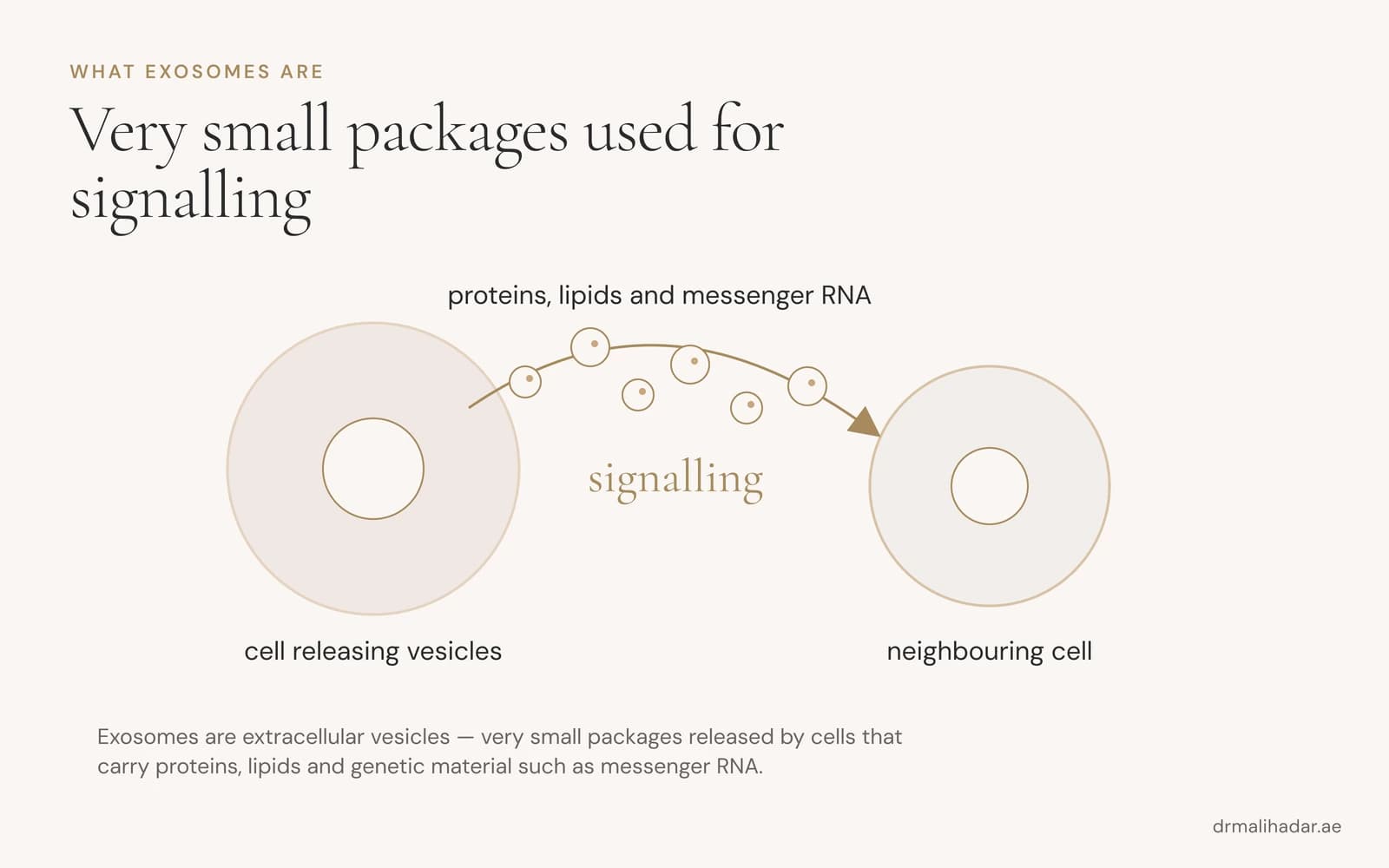
The rationale in aesthetics is that if you deliver these signalling packages into skin, you can prompt the local cells to behave in a more regenerative way: increased collagen production, reduced inflammation, faster repair.
That is a reasonable hypothesis, and laboratory and early clinical work supports parts of it. The gap between that and the claims sometimes made in advertising is where patients should be careful.
How it is performed
In most aesthetic settings exosomes are applied topically immediately after microneedling. The microneedling creates controlled micro-channels, and the exosome preparation is applied so it can reach beyond the skin surface.
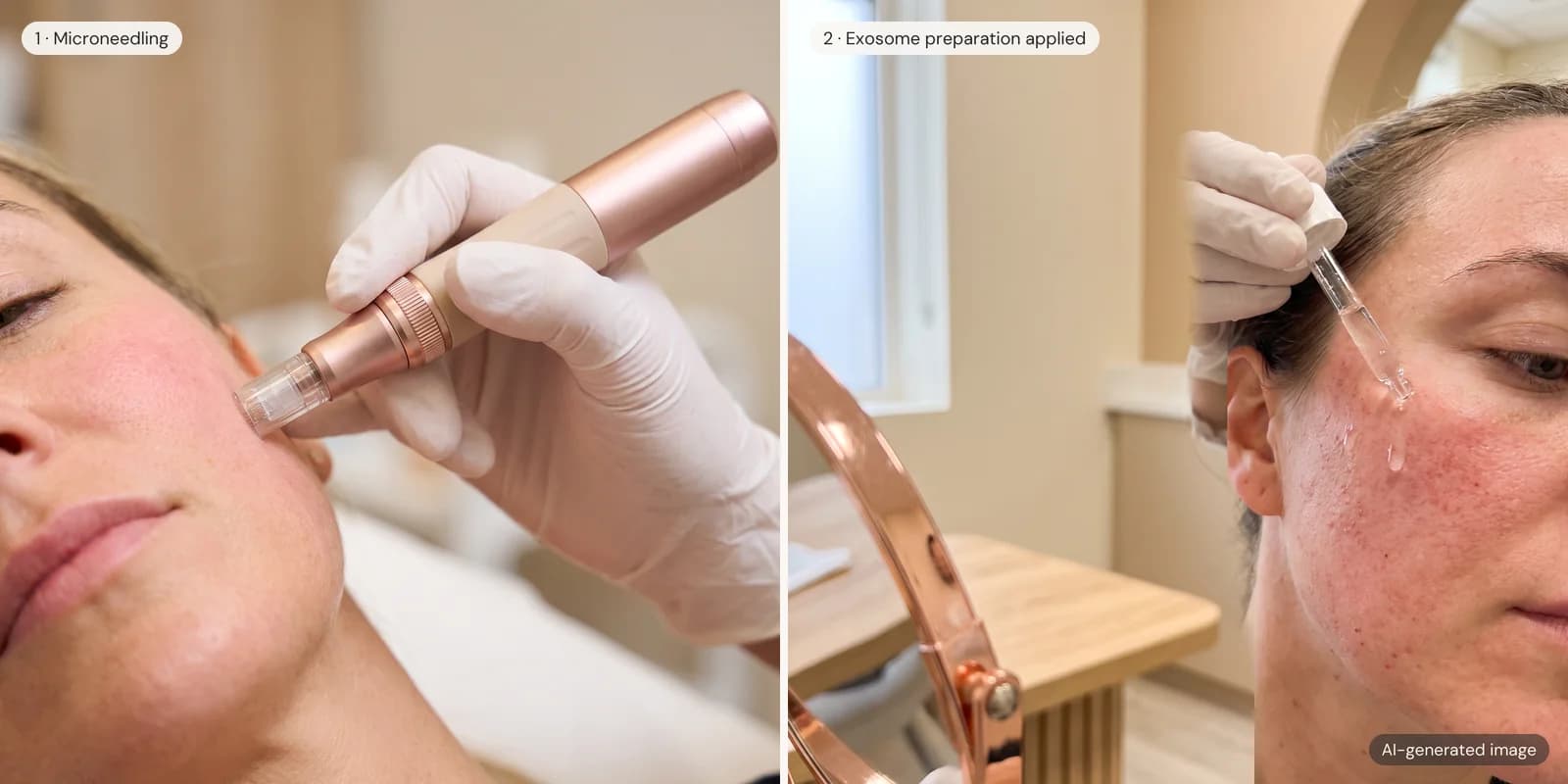
This has a consequence worth understanding: microneedling on its own stimulates collagen and improves skin. When a treatment combines the two, separating the effect of the exosomes from the effect of the needling is genuinely difficult, and much of the published work has this limitation.
Sessions take around an hour including numbing, with redness for one to three days afterwards, comparable to microneedling alone.
Exosomes compared with PRP
PRP is the closest established comparison, and patients frequently ask which to choose.
| PRP | Exosomes | |
|---|---|---|
| Source | Your own blood | Laboratory-produced from cell cultures |
| Requires blood draw? | Yes | No |
| Evidence base | Moderate, strongest for hair loss | Early; smaller independent base |
| Standardisation | Varies by preparation system | Varies by manufacturer and product |
| Typical use | Skin quality, acne scarring, hair | Skin quality, recovery, hair |
| Allergy risk | Minimal — autologous | Depends on the product used |
What the evidence currently supports
Being straightforward about this is more useful than enthusiasm.
There is credible laboratory evidence that exosomes influence cell behaviour in ways relevant to skin repair, and a growing number of small clinical studies reporting improvements in skin quality, redness and recovery after procedures. Patient satisfaction in practice is generally good.
The limitations are real. Study sizes are small, follow-up is short, many studies are industry-sponsored, and — importantly — exosome products are not standardised between manufacturers. Two products sold under the same category name may differ substantially in what they actually contain. Comparing results between studies, or between clinics, is therefore difficult.
It is fair to describe exosome therapy as promising and reasonable to offer, and unfair to describe it as proven superior to better-established options. Anyone presenting it as a breakthrough that outperforms everything else is ahead of the data.
Regulatory status: what to ask
This deserves a section of its own, because it is the part patients are least often told about and the part most likely to change.
Regulatory treatment of exosome products differs between jurisdictions, and the category has drawn scrutiny from regulators in several markets — including warnings in the United States about unapproved exosome products marketed for therapeutic use. Classification also depends on how a product is presented and administered.
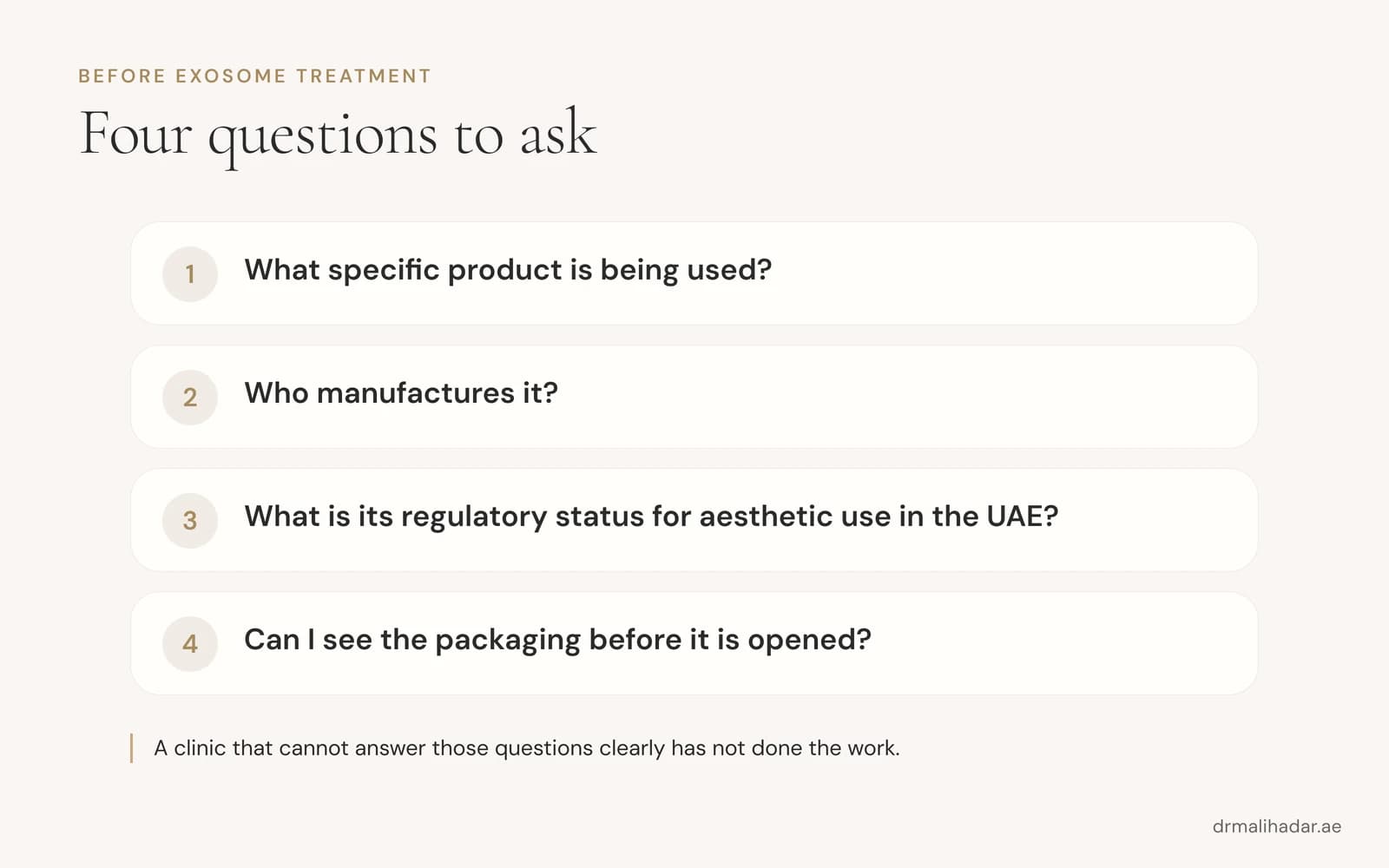
This clinic confirms product details at consultation. Where we are uncertain about regulatory classification, we will tell you that rather than reassure you.
Who it suits, and who should consider something else
Exosome therapy is reasonable for people seeking a regenerative approach to skin quality, those wanting to support recovery after other procedures, and those exploring options for early hair thinning alongside established treatments.
It is worth considering alternatives first if:
- You want the best-evidenced regenerative option — PRP has a longer track record, particularly for hair.
- Your main concern is texture and elasticity — polynucleotide treatment has more published clinical use for that specific indication.
- Your main concern is dehydration and early laxity — Profhilo targets that directly.
- Cost is a deciding factor — exosome products are generally among the more expensive options; compare published pricing on the prices page.
Suitability and next steps
It is not used during pregnancy or breastfeeding, where there is active infection in the treatment area, or where microneedling would otherwise be inappropriate. A full medical history is taken at consultation.
Frequently asked questions
- What are exosomes?
- Extracellular vesicles — very small packages released by cells that carry proteins, lipids and genetic material. They are one way cells signal to each other, and in aesthetics they are used to prompt a regenerative response in skin.
- Are exosomes approved for aesthetic use in the UAE?
- Regulatory classification of exosome products varies between markets and by product. We are not able to state the current UAE status for a specific product here. Ask any clinic which product they use and what its regulatory status is.
- Are exosomes better than PRP?
- Not demonstrably. PRP has a longer track record and a larger independent evidence base, particularly for hair loss. Exosome therapy is promising but the evidence is earlier and products are not standardised between manufacturers.
- How are exosomes applied to the skin?
- Most commonly topically, immediately after microneedling, so the preparation can pass beyond the skin surface through the micro-channels created. The session takes around an hour including numbing time.
- How many sessions will I need?
- Exosome treatment is usually given as a course rather than a single session, with results developing over two to four weeks and continuing to build. The number depends on your concern and is agreed at assessment.
- What is the downtime?
- Similar to microneedling — redness for one to three days, sometimes with mild swelling or sensitivity. Most people return to normal activity the next day but should avoid sun exposure and heat initially.
- Are exosomes safe?
- Reported side effects in aesthetic use are generally mild and related to the microneedling component. The larger uncertainty is product standardisation rather than acute safety, which is why knowing what product is being used matters.
- Do exosomes work for hair loss?
- They are used for early hair thinning and results are reported, but the evidence base is smaller than for PRP. As with any hair treatment, establishing why hair is shedding should come before choosing an injectable.
- Are exosome products made from human cells?
- Products vary in source, which is one reason to ask exactly what is being used. Source, manufacturer and regulatory status should all be disclosed by the clinic before you agree to treatment.
- Why are exosome treatments expensive?
- The products themselves are costly to produce. Compare the course cost rather than the single-session price, and weigh it against better-established options that may suit your concern equally well.
- Can I have exosome therapy during pregnancy?
- No. It is not used during pregnancy or breastfeeding, as safety has not been established in these groups, and the microneedling component is also generally avoided.
References
- [1]U.S. Food and Drug Administration. Public Safety Notification on Exosome Products.
- [2]Journal of Cosmetic Dermatology. Exosomes in dermatology and aesthetic medicine: a review of current applications and evidence (2023).
- [3]American Academy of Dermatology. Cosmetic Treatments: What to Know Before You Go.
This article was last updated on 29 September 2026. Clinical content is reviewed at least every 12 months, and sooner if guidance changes.
Medical Disclaimer
This article is for educational purposes only and does not replace a personalised medical consultation. Treatment suitability varies by individual. Please book a consultation with Dr. Maliha Dar before proceeding with any aesthetic procedure.
Related Articles
 Skin Health
What Are Polynucleotides and PDRN? A Plain-English Guide
Salmon DNA in your skin sounds alarming until you understand what it actually is. A jargon-free explanation of polynucleotides, PDRN, and how they differ.
 RegenerativeAI image
Rejuran: A Doctor's Guide to Polynucleotide Skin Healing
What Rejuran is, how polynucleotides work, how many sessions it realistically takes, and who it does not suit — from a DHA-licensed General Practitioner.