Skin Health
Rejuran vs Profhilo: Which Treatment Suits Your Skin?
They are both injected, neither is a filler, and they solve different problems. A side-by-side comparison of mechanism, course, downtime and who each one suits.
Medically reviewed by Dr. Maliha Dar, DHA-licensed General Practitioner (licence 29664582-005) · 29 September 2026
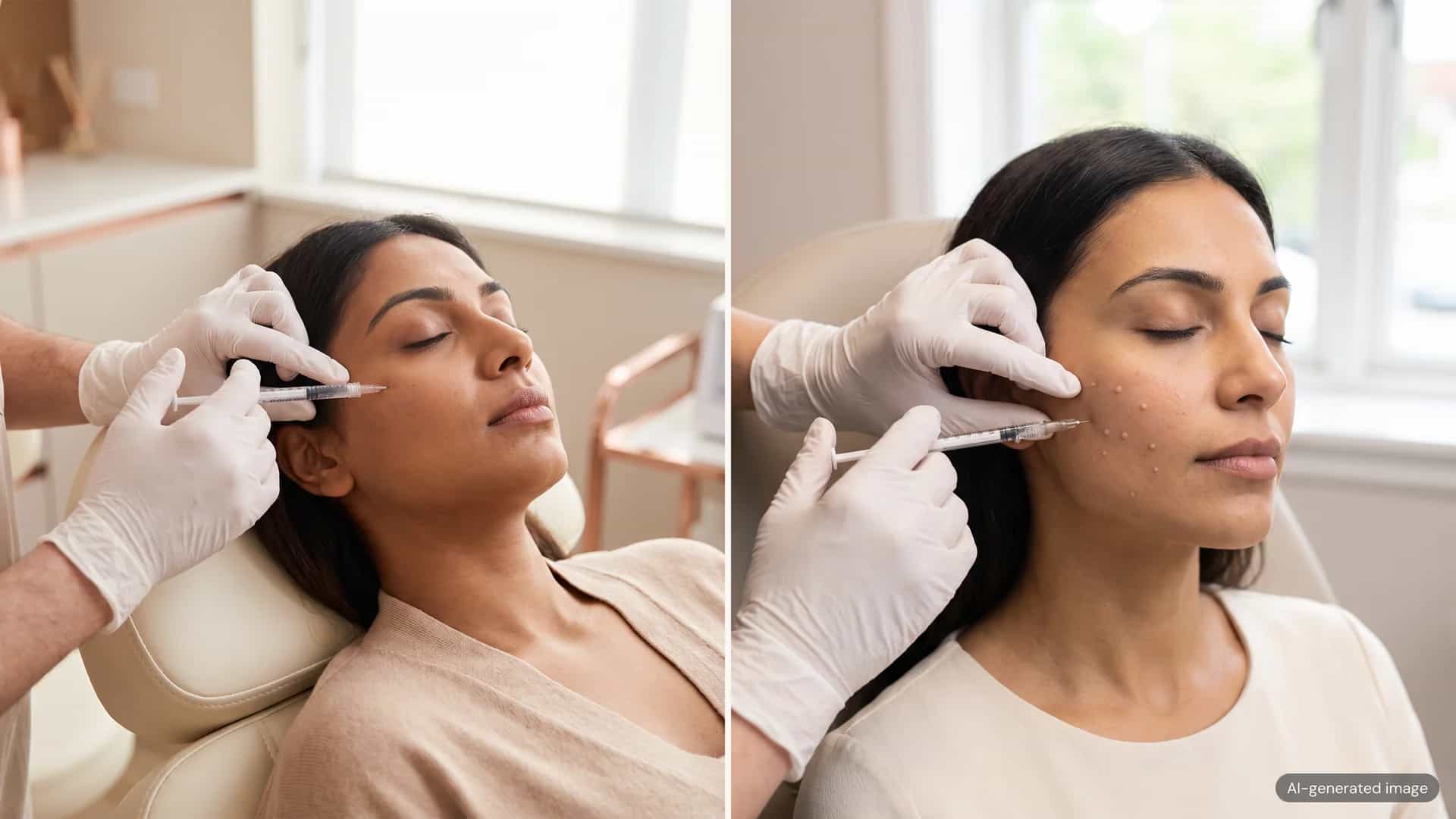
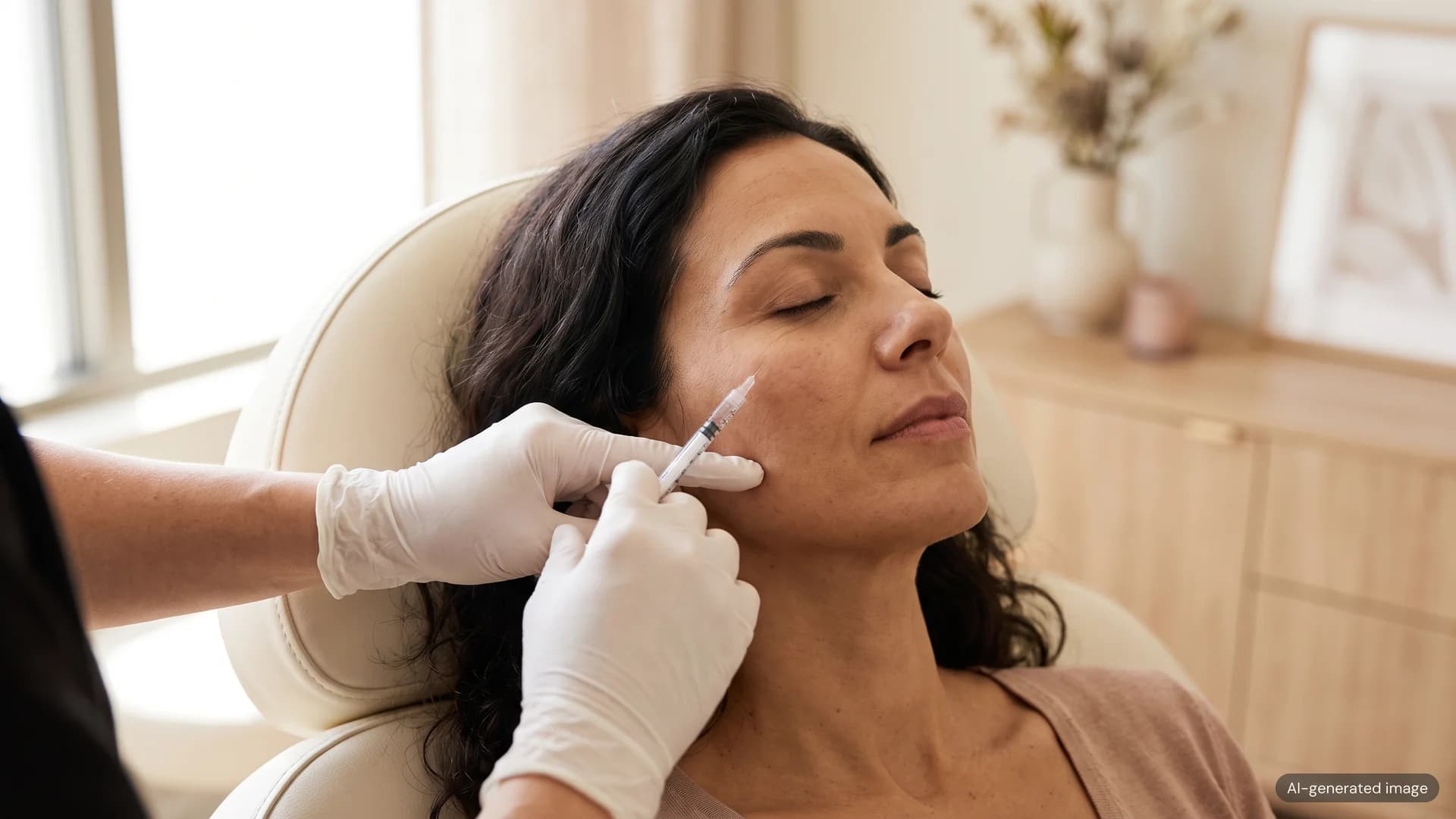
Header image: AI-generated illustration; not a real patient.
In short
Both are injectables that improve skin quality rather than adding volume, but they work differently. Profhilo is bio-remodelling hyaluronic acid targeting hydration and early laxity over two sessions. Rejuran is a polynucleotide treatment targeting texture, elasticity and repair over three to four sessions.
Key facts
| Both are | Skin-quality injectables, not fillers |
|---|---|
| Profhilo is | Bio-remodelling hyaluronic acid |
| Rejuran is | Polynucleotides from purified salmon DNA |
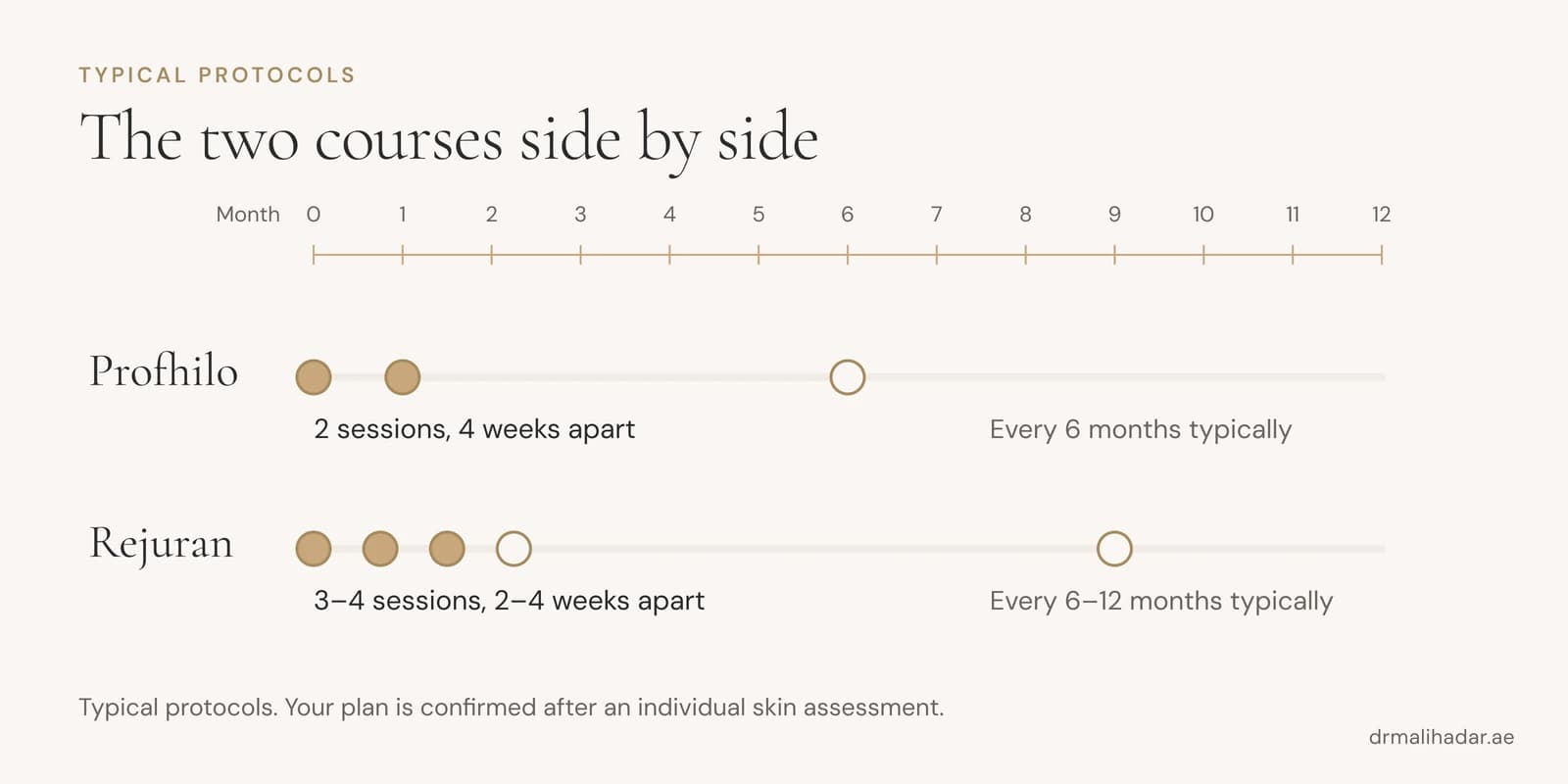
| Profhilo course | Usually 2 sessions, 4 weeks apart |
| Rejuran course | Usually 3–4 sessions, 2–4 weeks apart |
| Can they be combined? | Often yes, sequenced rather than same-day |
| Neither will | Lift sagging skin or replace lost volume |
This is one of the most common questions asked in consultation, and the honest answer is that it depends on which problem you actually have. They are not competing versions of the same treatment.
Both are injected into the skin, neither adds volume, and both improve how skin looks and behaves. Beyond that they differ in mechanism, in the course required, and in the concern they address best.
Side-by-side comparison
The table below sets out the practical differences. Which matters most to you depends on your primary concern.
| Profhilo | Rejuran | |
|---|---|---|
| Active ingredient | Stabilised hyaluronic acid | Polynucleotides (salmon-derived) |
| Mechanism | Slow-release HA; hydration and bio-remodelling | Supports fibroblast activity and tissue repair |
| Best for | Dehydration, crepey skin, early laxity | Texture, elasticity, resilience, thin skin |
| Typical course | 2 sessions, 4 weeks apart | 3–4 sessions, 2–4 weeks apart |
| Session length | 30–45 minutes | 45–60 minutes |
| Downtime | Small bumps 24–48 hours | Bumps and redness 1–2 days |
| When results show | Hydration in days; firmness over 4–8 weeks | Builds over 3–4 weeks per session |
| Maintenance | Every 6 months typically | Every 6–12 months typically |
| Not suitable if | Pregnancy, breastfeeding, active infection | Fish allergy, pregnancy, breastfeeding |
How to choose between them
A reasonable rule of thumb, though it is not a substitute for assessment:
- Skin feels tight, looks dull and dehydrated, with early looseness — Profhilo is usually the better starting point, and the two-session protocol is quicker to complete.
- Skin texture is rough or uneven, with fine crepey lines and thin skin — Rejuran is generally the better fit.
- The concern is specifically the under-eye area — Rejuran Eye is formulated for that skin; Profhilo is not typically used there.
- You want the shortest course — Profhilo, at two sessions rather than three or four.
- You have a fish or seafood allergy — Rejuran is not an option; Profhilo may be.

Can you have both?
Yes, and for some patients a sequenced plan using both is more sensible than choosing one. They act on different aspects of skin quality, so the effects are complementary rather than duplicated.
They are not usually performed on the same day. Spacing them allows each to be assessed on its own, which matters — if everything is done at once and the result is good, you have no idea which treatment delivered it, and you pay for both again next time.
A typical sequenced approach completes one course first, assesses at the end of it, then introduces the second if the remaining concern justifies it. This also spreads the cost, which is worth saying plainly.
What neither treatment will do
Both are skin-quality treatments. Neither repositions tissue.
Cost and practical planning
Plan around downtime for either. Small injection bumps are normal for a day or two, so avoid booking immediately before an event.
Frequently asked questions
- Which is better, Rejuran or Profhilo?
- Neither is better in the abstract — they treat different things. Profhilo suits dehydration and early laxity; Rejuran suits texture, elasticity and thin skin. The right choice depends on your primary concern, established at assessment.
- Can I have Rejuran and Profhilo together?
- Yes, and a sequenced plan using both suits some patients. They are usually spaced rather than done on the same day, so each can be assessed on its own merits and you know which treatment produced which effect.
- Which one lasts longer?
- Both are typically maintained at six to twelve month intervals after a completed course. Duration varies more by individual skin, lifestyle and sun exposure than by which of the two treatments you choose.
- Which has less downtime?
- They are broadly similar. Both leave small injection-point bumps that settle within 24–48 hours, with possible redness and bruising. Neither is a treatment to have two days before an important event.
- Which needs fewer sessions?
- Profhilo, typically two sessions four weeks apart, compared with three to four for Rejuran. If completing a course quickly matters to you, that is a genuine practical difference.
- Is Profhilo a filler?
- No. It uses hyaluronic acid, the same base ingredient as many fillers, but it is formulated to spread and hydrate rather than to hold shape. It does not add volume or change contour.
- Which is better for under-eye skin?
- Rejuran Eye is formulated specifically for the thin periorbital skin. Profhilo is not typically used in that area. Neither treats hollowing or pigmentation, which have different causes and different solutions.
- Can either treatment tighten sagging skin?
- Neither lifts significant sagging. Both can improve early laxity by improving skin quality, but where there is genuine tissue descent and excess skin, no injectable repositions it and surgery is the honest answer.
- Which is more expensive?
- Compare course cost rather than session cost, since the two require different numbers of sessions. Current published per-session and course prices for both are on the prices page.
- Can I have either while pregnant?
- No. Neither is used during pregnancy or breastfeeding, as safety has not been established in these groups. Treatment should be postponed until afterwards.
References
- [1]Journal of Cosmetic Dermatology. Polydeoxyribonucleotide in aesthetic and regenerative dermatology: a review of mechanisms and clinical applications (2023).
- [2]Clinical, Cosmetic and Investigational Dermatology. Stabilised hyaluronic acid for skin bio-remodelling: mechanism and clinical outcomes (2021).
This article was last updated on 29 September 2026. Clinical content is reviewed at least every 12 months, and sooner if guidance changes.
Medical Disclaimer
This article is for educational purposes only and does not replace a personalised medical consultation. Treatment suitability varies by individual. Please book a consultation with Dr. Maliha Dar before proceeding with any aesthetic procedure.
Related Articles
 RegenerativeAI image
Rejuran: A Doctor's Guide to Polynucleotide Skin Healing
What Rejuran is, how polynucleotides work, how many sessions it realistically takes, and who it does not suit — from a DHA-licensed General Practitioner.
 Skin HealthAI image
Profhilo Explained: How Bio-Remodelling Differs From Filler
Profhilo uses the same base ingredient as many fillers but does the opposite job. How bio-remodelling works, the two-session protocol, and what it cannot fix.